


The most practical way to transfer headquarters to the US is to establish an American subsidiary and use an L-1 visa to transfer executives and managers. USCIS It requires a prior one-year employment relationship between the employee and the company, as well as proof of sufficient physical operational space. Before any changes, however, it is essential to assess tax risks with the IRS and seek specialized advice to avoid costly structural errors later on.
 Transferring ownership of intellectual property to the American entity, on the other hand, can generate taxable capital gains in Brazil and requires a formal valuation of the asset before the transfer. There is no neutral option: each path has tax consequences, and the wrong choice is costly in both countries. Intercompany licensing agreements are directly targeted by the transfer pricing cited by the IRS: royalties paid from the American subsidiary to the Brazilian parent company must reflect market value, with documentation to support this value should the American tax authorities question it. Companies that register intellectual property without this precaution only discover the problem in the first audit, when it is already too late to correct it retroactively.
Choosing the location of an office is also a tax decision, not just a logistical one: the state where the physical location is established determines state tax obligations, even when the entity is already incorporated in another state. Companies that choose a physical office solely based on rental costs, without considering the state tax regime, end up paying that discount back in taxes in subsequent years.
A typical project begins with diagnosing the ideal structure, followed by the incorporation of the entity and transfer pricing planning, and includes direct support with visa applications for the executives who will lead the US operation. The international expansion to the US page details this complete scope. If your company has already decided to relocate its headquarters but doesn't yet know where to begin structuring, please visit [link/website/etc.]. Contact Naventia For an initial diagnosis, discover which legal and tax path best fits your business plan.
Transferring ownership of intellectual property to the American entity, on the other hand, can generate taxable capital gains in Brazil and requires a formal valuation of the asset before the transfer. There is no neutral option: each path has tax consequences, and the wrong choice is costly in both countries. Intercompany licensing agreements are directly targeted by the transfer pricing cited by the IRS: royalties paid from the American subsidiary to the Brazilian parent company must reflect market value, with documentation to support this value should the American tax authorities question it. Companies that register intellectual property without this precaution only discover the problem in the first audit, when it is already too late to correct it retroactively.
Choosing the location of an office is also a tax decision, not just a logistical one: the state where the physical location is established determines state tax obligations, even when the entity is already incorporated in another state. Companies that choose a physical office solely based on rental costs, without considering the state tax regime, end up paying that discount back in taxes in subsequent years.
A typical project begins with diagnosing the ideal structure, followed by the incorporation of the entity and transfer pricing planning, and includes direct support with visa applications for the executives who will lead the US operation. The international expansion to the US page details this complete scope. If your company has already decided to relocate its headquarters but doesn't yet know where to begin structuring, please visit [link/website/etc.]. Contact Naventia For an initial diagnosis, discover which legal and tax path best fits your business plan.
In summary:
- Moving headquarters to the US only makes sense for companies with recurring revenue, American clients or investors, or a need for asset protection.
- The choice of legal structure should consider the tax impact, with subsidiaries, C-Corp or LLCs being common options for serious growth operations.
- The L-1A visa is the primary instrument for transferring executives, requiring proof of one year of employment with the company and adequate physical space.
- Sequencing errors, such as unplanned domestication and undocumented transfer pricing agreements, can generate high tax liabilities.
- Planning a headquarters relocation involves sequential steps of diagnosis, incorporation, documentation, and technological infrastructure, to avoid delays and extra costs.
Index
- When does it make sense to move headquarters to the US?
- Legal structure: representative, branch, subsidiary or domestication
- Which visas allow executives to relocate to the US?
- Tax and compliance implications when transferring headquarters.
- Step by step: transfer documents and timeline
- Common risks and pitfalls when transferring headquarters
- There are specialized consulting firms that support Brazilian companies from the initial diagnosis to the positioning of operations in the US, with experts present in the United States to guide decisions that depend on the local context. Internationalization projects typically cover diagnosis of the ideal structure, corporate and tax structuring, support in obtaining visas, and operational follow-up after opening.
- What to do now, in practice.
- Labor aspects in the transfer of employees
- Intellectual property and intangible assets in the transfer
- Systems and IT migration during the transfer.
- Physical office relocation and international logistics
- What most guides on expanding into the US don't tell you.
- Naventia: full support for transferring its headquarters to the USA.
- Sources
When does it make sense to move headquarters to the US?
Relocating headquarters is not a decision for companies in the testing phase. It makes sense when the Brazilian operation already has recurring revenue, a concrete American client or investor on the radar, or a need for asset protection that the Brazilian structure does not offer. The most common motivators appear in combination, rarely in isolation:- Access to a consumer or capital market that requires a physical or corporate presence in the U.S.
- Raising investment with funds that only invest in entities domiciled in the country.
- More robust governance, with a board, contracts, and asset protection under US law.
- The need to issue contracts, invoice, or employ locally without relying on third parties.
Legal structure: representative, branch, subsidiary or domestication
The choice of legal vehicle determines how much tax the company pays, who is responsible for the debts, and how much compliance work it undertakes. Trade It describes three typical operating models for foreign companies entering the U.S., each with a different tax burden.- Representative officeWithout direct revenue in the US, it can avoid federal taxation if activities are restricted to marketing and support, without closing sales.
- BranchIt operates as an extension of the Brazilian parent company, but generates... effectively connected income (ECI) and is subject to subsidiary profit tax, in addition to corporate tax.
- Subsidiary (C-Corp or LLC): an independent American entity, subject to the federal 21% tax rate on corporate income, with limited liability and greater predictability for repatriating dividends.
- Domestication: converts the foreign entity into a US entity, but may generate immediate taxation on shareholders under section 367(b), according to an analysis by Skadden.
Which visas allow executives to relocate to the US?
The L-1 visa is the central instrument for enabling the transfer of headquarters, but its requirements change depending on whether the subsidiary already exists or is being created.- L-1A (executives and managers) and L-1B (specialized knowledge)They require that the employee has worked for the Brazilian company for at least one year within the last three years, in a qualified relationship between the parent company and the American entity, according to the USCIS policy manual.
- New officeWhen a US subsidiary is newly created, initial approval is usually limited to one year, and the company needs to demonstrate adequate physical space and a viable business plan.
- Existing officeIf the American entity has been operating for a longer period, the initial approval may take up to three years, with less requirement for proof of operation.
- AlternativesThe E-2 program is for investors from treaty countries; the EB-1C program is for executives seeking direct permanent residency; the EB-2 NIW program is for exceptionally qualified individuals who do not require formal employment sponsorship.
Tax and compliance implications when transferring headquarters.
The chosen structure determines whether the company creates a US trade or business (USTB), the trigger that activates federal taxation on income connected to American activity (ECI). Even small operations can cross this threshold: a sales team active in the US, without any formal entity, can already trigger USTB, according to analysis by KPMG Regarding foreign investment, the choice between a C-Corp and a pass-through structure significantly changes net income.- One C-Corp Pays 21% of federal income tax, plus state tax depending on the state of operation.
- One branch A foreign company, in addition to corporate tax, may be subject to... branch profits tax, which taxes the repatriation of profits to Brazil.
- Payments of FDAP (interest, royalties, dividends) to related parties abroad are subject to withholding tax, unless a treaty applies.
- O state nexus It is defined separately from the federal level: a state may require registration and assessment even if the company does not have a physical office there, with its own rules. apportionment to divide taxable revenue among states.
Step by step: transfer documents and timeline
Execute the transfer of headquarters to the USA requires sequencing corporate, tax, and immigration decisions in the correct order, because each step depends on the previous one.- Due diligence and business planMap out the objectives, choose the incorporation status, and define whether the structure will be C-Corp, LLC, or a branch.
- Constitution of the entityRegister articles of incorporation or articles of organization in the chosen state and obtain an EIN from the IRS.
- State registration as a foreign companyIf the operation spans more than one state, a certificate of authority must be obtained in the additional states.
- Lease agreement: sign a contract that proves operational physical space, a central document for the L-1 new office application.
- L-1 Petition (Form I-129): gather proof of the employee's affiliation, the relationship between entities, and the viability of the business plan.
- Opening an American bank accountTypically requires an EIN, proof of address, and the presence of a partner or representative in the U.S.
Common risks and pitfalls when transferring headquarters
In the transfer of headquarters to the USA, sequencing and documentation errors cost more than any official fee. The most common are:- Domestication without prior analysisConverting the Brazilian entity directly may trigger immediate taxation on shareholders under section 367(b), a trigger that catches many companies off guard.
- Improvised transfer pricingIntercompany contracts lacking market price documentation may trigger tax adjustments and fines from the IRS.
- Poorly designed function for the L-1Positions that are not primarily executive or managerial in nature do not qualify the employee, even if they hold the title of director on paper.
- Bank KYC failureAmerican banks refuse to open accounts when the corporate structure or the origin of the partners is not clear in the documentation.
Is it worth hiring a specialized consulting firm?
There are specialized consulting firms that support Brazilian companies from the initial diagnosis to the positioning of operations in the US, with experts present in the United States to guide decisions that depend on the local context. Internationalization projects typically cover diagnosis of the ideal structure, corporate and tax structuring, support in obtaining visas, and operational follow-up after opening. It is worthwhile to hire a specialized consulting firm when the company has already made a business decision but does not yet know how to translate this into a legal and tax structure without exposing its cash flow to avoidable risks. Our page on international expansion to the US details the typical scope of a project.What to do now, in practice.
The recommended approach combines three simultaneous decisions: prior tax planning, choice of corporate structure, and visa strategy for executives. None of these areas works in isolation. A well-designed subsidiary without visas for the leadership team will not move the operation forward; a visa approved without a solid tax structure creates liabilities from the first year. The next practical step is to run a diagnostic assessment that models the tax burden, state selection, and immigration eligibility before signing any lease agreement or registering any entity. Companies that skip this step usually correct the mistake later, at a much higher cost than it would have been to plan ahead.Labor aspects in the transfer of employees
Transferring executives to the US does not automatically resolve their employment relationship. The Brazilian contract needs to be formally terminated or suspended, and a new contract under US law needs to come into effect, respecting state rules that vary considerably. States like California and New York have stricter labor requirements than others, including rules on notice periods, mandatory benefits, and anti-discrimination policies that do not exist in Brazilian law. Hiring without addressing these points exposes the company to labor lawsuits from the first months of operation. Employees arriving with an L-1 visa depend on the immigration status of the holder: dependents receive an L-2 visa, which allows work with their own authorization. This changes the hiring plans for spouses and family members who also want to work in the US operation. For new local hires, made directly in the US, the company needs to comply with the legislation of [Brazil]. at will employment, This law, which allows for termination without cause in most states, requires written conduct and compliance policies to reduce the risk of litigation. Documenting HR policies from the first contract, and not after the first problem arises, is what separates operations that grow smoothly from those that waste time and money on avoidable disputes.Intellectual property and intangible assets in the transfer
Transferring headquarters involves deciding where the company's intellectual property will reside, and this decision has a direct tax impact. Maintaining trademarks, patents, and software registered in Brazil while commercial operations migrate to the US creates a licensing relationship between the two entities that needs to be priced as a related-party transaction. Transferring ownership of intellectual property to the American entity, on the other hand, can generate taxable capital gains in Brazil and requires a formal valuation of the asset before the transfer. There is no neutral option: each path has tax consequences, and the wrong choice is costly in both countries. Intercompany licensing agreements are directly targeted by the transfer pricing cited by the IRS: royalties paid from the American subsidiary to the Brazilian parent company must reflect market value, with documentation to support this value should the American tax authorities question it. Companies that register intellectual property without this precaution only discover the problem in the first audit, when it is already too late to correct it retroactively.
Systems and IT migration during the transfer.
Technology infrastructure rarely receives the same attention as corporate structure, but it determines whether the American operation works on day one. Brazilian financial, CRM, and payroll systems generally do not meet American accounting, currency, and tax compliance requirements, forcing the company to migrate or duplicate tools. The practical priority is to separate data and access by legal entity, not just by geographic location. Mixing databases from the Brazilian and American operations creates compliance problems and hinders separate tax audits, which are required when two distinct entities exist. Companies that make this transition well plan the migration in phases: first, financial and payroll systems, which have a legal deadline to function correctly from the start, then operational and customer service systems. Accounting tools compatible with American accounting standards (GAAP) and integrated with local payroll processing are usually prioritized over any other system because errors here generate direct tax penalties, not just operational inefficiency.Physical office relocation and international logistics
The physical aspect of relocating headquarters is the most visible, but it's often underestimated in the planning process. Renting space in the U.S. isn't just a formality for the L-1 visa application: the lease agreement needs to reflect the actual operational needs, because USCIS assesses whether the space is compatible with the presented business plan. Moving equipment, inventory, or office supplies between countries involves customs clearance, which varies depending on the type of goods and the destination state. Electronic equipment and specific machinery may require additional certifications for commercial use in the U.S., which delays operations if not mapped out in advance.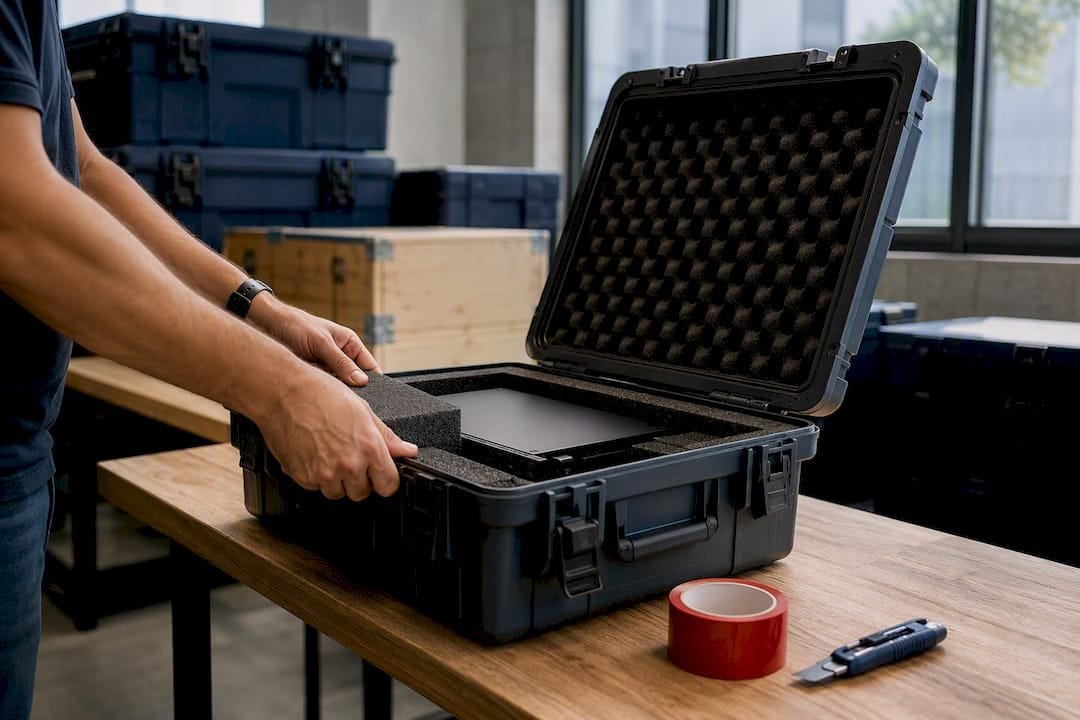 Choosing the location of an office is also a tax decision, not just a logistical one: the state where the physical location is established determines state tax obligations, even when the entity is already incorporated in another state. Companies that choose a physical office solely based on rental costs, without considering the state tax regime, end up paying that discount back in taxes in subsequent years.
What most guides on expanding into the US don't tell you.
Most of the available content treats visas and corporate structure as separate problems, solved by different professionals at different times. This separation is the most costly mistake I see in operations that stall midway. The L-1 visa depends on the company already having a defined corporate structure and a credible business plan to support the application. The corporate structure, in turn, only makes sense after knowing who will operate in the US and under what immigration status. Addressing these two fronts sequentially, and not in parallel, is what generates the months-long delays that appear in almost every account of poorly planned expansion. The other underestimated point is the weight of international tax planning before incorporation, not after. The interaction between the American and Brazilian tax regimes, including tax credits and rules for taxing profits abroad, changes the net result of the operation more significantly than most founders expect. Deciding on the structure first and modeling the tax impact later is doing the work in the wrong order.— Flavio Inacarato
Naventia: full support for transferring its headquarters to the USA.
Some specialized consulting firms structure visa, society, and tax matters as a single project, with experts living in the U.S. to monitor decisions that require local context. A typical project begins with diagnosing the ideal structure, followed by the incorporation of the entity and transfer pricing planning, and includes direct support with visa applications for the executives who will lead the US operation. The international expansion to the US page details this complete scope. If your company has already decided to relocate its headquarters but doesn't yet know where to begin structuring, please visit [link/website/etc.]. Contact Naventia For an initial diagnosis, discover which legal and tax path best fits your business plan.