
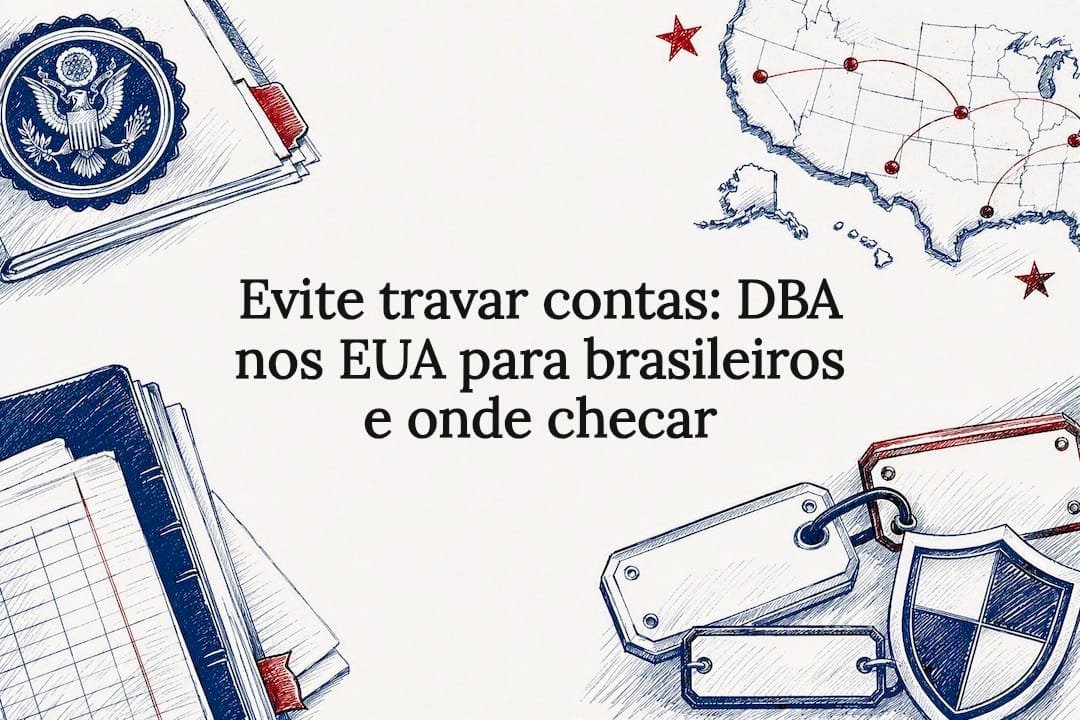
A DBA (doing business as) is a business name in the US. It allows a company to operate under a business name different from the legal name of the owner or entity, but it does not create a new company or protect personal assets.
It's useful for opening bank accounts and issuing invoices with the correct name. If your goal is to protect assets or guarantee brand exclusivity, a DBA in the US alone won't solve the problem.
In summary:
- Registering a DBA in the US does not protect personal assets or create a new company — it only allows you to use a different business name.
- In the US, operating under a brand different from the company's name typically requires a DBA (Database Administrator) to open a bank account or issue invoices.
- An LLC protects personal assets; a DBA in the US does not isolate risks or liabilities.
- DBA registration varies by state: it may require fees, journal publication, and periodic renewal.
- Banks and suppliers require a DBA certificate in the US to open accounts and issue contracts.
Index
- What is a DBA in the US and why does it exist?
- When do you need to register a DBA?
- DBA vs LLC: When to also consider a trademark
- How to register a DBA step by step
- How much does it cost and how long does it take to register a DBA?
- Why do banks and suppliers require a DBA certificate in the US?
- The risks of operating with only a DBA.
- How Naventia helps those who will operate in the USA.
- What really matters when making the decision?
- Do you want to do this safely, without trial and error?
- Where to confirm the rules before registering.
- Sources
What is a DBA in the US and why does it exist?
DBA stands for "doing business as," but you'll find the same concept under different names depending on the state: trade name, assumed name, or fictitious name.
They all point to the same thing: a public registry that connects a business name to its true legal owner, whether it's an individual or a company.
O SBA (Small Business Administration) In the US, a DBA is defined as an alias that does not constitute a legal entity and offers no protection against personal liability.
This means that registering a DBA in the US doesn't change your exposure to debt or lawsuits, it only changes the name that appears on your articles of incorporation and license plates.
The reason for this requirement is simple: transparency. When a client, supplier, or bank does business with "Padaria Doce Sabor," they need to know, through some public record, who is actually responsible for that transaction.
- Trade name: a term more common in states like California.
- Assumed name: frequently used in American Midwestern states.
- Fictitious name: a typical expression from Florida and other southern states.
- DBA: the generic term that most banks and federal agencies recognize.
This variation in nomenclature confuses many Brazilian entrepreneurs during their initial research. In practice, the legal effect is the same in any state: you gain the right to use a business name publicly, without creating a new legal entity.
When do you need to register a DBA in the US?
The need to register a DBA depends on how your company is structured and how you intend to use the business name. Before deciding, it's worth mapping out your situation:
- Sole proprietorship or informal partnership Anyone wishing to operate under a name different from the owner's name almost always needs a DBA to open an account in the business's name.
- LLC or corporation A company that wishes to operate under a brand name distinct from the name registered in its articles of incorporation also needs a DBA, even if it is already a legal entity.
- A company that sells across multiple product or service lines., Companies with different names for each line typically register a DBA per brand, without opening a separate LLC for each one.
Before filing, answer three questions: Will you use this name publicly in contracts and invoices? Do you need a bank account under that business name?
Does the city or county require a license associated with that name? If the answer is yes to either, a DBA is practically mandatory, not just recommended.
DBA vs LLC: When to also consider a trademark
The key difference between a DBA and an LLC is asset protection. A DBA is just a name, not an entity. An LLC, on the other hand, legally separates the company's assets from the personal assets of its owners, within the limits established by state law.
Experts in American corporate law recommend that growing companies consider forming Separate LLCs for business lines with distinct risks, since the DBA does not isolate risk between different operations within the same entity, according to analysis by Nolo.
If you operate an aesthetic clinic and, within the same LLC, an e-commerce business selling supplements under separate DBAs, a lawsuit against one business could negatively impact the assets of the other.
- DBA alone It works well for freelancers and small local businesses without significant risk exposure.
- LLC with DBA It's the most common path for those who already have a consistent income and want to separate their assets.
- Federal trademark This comes into play when the goal is exclusive use of the name throughout the United States, something that the DBA never guarantees, as explained by... Wolters Kluwer.
Pro tip: Registering the DBA in your county does not prevent another company in another state from using the same name. If branding is central to your business, treat trademark registration as a priority, not as an optional step for later.
How to register a DBA in the US step by step
The procedure varies considerably from jurisdiction to jurisdiction, and this is the biggest source of confusion for those who have never dealt with the American system. In some states, registration is done with the Secretary of State; in others, with the county clerk of the city where the company operates.
Some jurisdictions allow multiple DBAs for the same entity, while others impose specific rules, depending on the... LLC University, This reinforces the need to confirm local rules before filing any documents.
- Determine whether the filing is state or municipal by consulting the official website of the state or county.
- Check the availability of the name to avoid conflict with already registered trademarks.
- Fill out the official form, usually available online.
- Pay the filing fee required by the jurisdiction.
- Publish the notice in a local newspaper, if required by the state.
- Obtain your DBA certificate, a document that will open doors with banks and suppliers.
| Step | Where to check | Resulting document |
|---|---|---|
| Filling the name | Secretary of State or county clerk | Registration protocol |
| Publication (if required) | Local newspaper approved by the county. | Proof of publication |
| Issuance of the certificate | Body that processed the filing | DBA Certificate |
| Account opening | American bank | EIN + DBA certificate |
For those who already have an LLC, it's worth remembering that the process of linking a DBA to the entity is usually straightforward, according to... LegalZoomAll you need is the correct form and payment of the fee.
Keep the EIN, articles of organization, and operating agreement safe, because the bank will ask for all these documents along with the DBA certificate when applying. open account.
How much does it cost and how long does it take to register a DBA in the US?
The cost of a DBA varies by jurisdiction, but it is usually one of the cheapest registrations in the American system. The price increases mainly when the state requires publication in a local newspaper, an item cited as the main cause of unexpected additional costs in this process, according to the SBA.
Processing times also vary. Some counties issue the certificate in a few days; others take weeks, especially when newspaper publication is mandatory and needs to be completed before final issuance.
- Filing fees are usually low compared to the cost of opening an LLC, varying by jurisdiction.
- Publication in a newspaper, when required, is the item that most increases the cost of the process.
- Renewals are required in many jurisdictions, with common cycles ranging from one to five years, according to the SBA.
- Allowing a registration to expire without renewal creates public confusion about who is responsible for the business and can hinder banking operations.
If the business name ceases to be used, formally cancel the DBA. Maintaining an active registration without actual use only creates unnecessary administrative exposure.
Why do banks and suppliers require a DBA certificate?
American financial institutions treat the DBA certificate as a mandatory document for opening a business account. Without it, many banks simply refuse to open the account or process payments in the name of the trade name, as LegalZoom points out.
- The DBA certificate, along with the EIN, is the pair of documents that most banks require when opening an account.
- Contracts and invoices issued in the DBA's name must accurately reflect the registered name, without variations.
- An EIN is required whenever you hire employees, open a bank account in the company's name, or need to file federal taxes separately from the owner's CPF (Brazilian individual taxpayer registration number).
Municipal licenses also often link administrative processes to the registered DBA, making the certificate a practical prerequisite even when state law does not explicitly require it.
The risks of operating with only a DBA in the US
The most common mistake people make when registering a DBA is thinking that it solves everything. It doesn't. A DBA doesn't protect your personal assets from debts or lawsuits related to the business, and it doesn't prevent another company from registering the same name in a different state or county.
- Do not check for trademark conflicts. before registering, which could lead to a dispute with a company that already uses a similar name elsewhere.
- Ignoring the publication requirement when the state requests it, which invalidates the registration and delays the issuance of the certificate.
- Let the DBA expire. Without renewing, the document loses its validity precisely when the bank or a supplier requests an updated certificate.
Pro tip: Before registering, do a simple search in the USPTO trademark database and your county registry. Five minutes of research can prevent months of dispute later.
Those who grow without correcting these flaws usually end up needing an LLC or a federal trademark later on, sometimes under pressure, because a name conflict has already arisen.
How does Naventia help those who are going to open a DBA in the US?
There are teams based in the United States that avoid relying solely on generic guidance found online.
Support typically makes sense when the business is already growing across states, when there is significant tax risk, or when the owner's personal assets need real protection, not just a business name.
The workflow may include diagnosing the ideal structure, deciding between DBA, LLC, or C-Corp, and assisting in opening a US bank account.
What really matters when making the decision?
The most sound practice is simple: use a DBA in the US to build your brand, use an LLC to protect your assets, and reserve the trademark for when name exclusivity is non-negotiable.
Most Brazilian entrepreneurs get the order wrong, resolving the name first and the protection later, when it's already too late. Plan this sequence in advance and get local support before signing any contracts in the US.
Flavio
Do you want to do this safely, without trial and error?
Registering a DBA without understanding the structure behind it is like building the facade before the foundation: it works until the first problem appears.
There are alternatives to avoid making this decision alone from a distance, with teams based in the US that help companies choose between DBA, LLC, and C-Corp without making naming, publication, and renewal mistakes that stall operations.

The work can begin with a diagnosis of the company's structure, move on to choosing the ideal state, and include opening a US bank account and monitoring the operation's compliance.
If you've already decided that you're going to operate in the US and want to do it with a international expansion strategy Well-defined from the start, contact us for an evaluation and discover which structure, DBA, LLC, or both, makes sense for your case.
Where to confirm the rules before registering.
- O SBA name selection guide It explains the legal terms and implications of each type of registration.
- O SBA company registration guide It details the differences in requirements between states and counties.
- For specific legal issues related to immigration, contracts, and intellectual property, the Legal Workshop.
This article provides general information and is not a substitute for the advice of a qualified financial advisor. Consult a qualified financial professional about your specific situation before acting on this information.
Sources
- Choose your business name | US Small Business Administration
- Register your business | US Small Business Administration
- How to add a DBA to an LLC | LegalZoom
- What is DBA? When to file one for your business | Wolters Kluwer