

Understanding e-commerce sales tax is essential if your annual sales to a US state exceed the local threshold (usually US$ 100,000 or 200 transactions) or if you maintain inventory within US territory, such as on Amazon FBA, you are likely already obligated to collect and remit sales tax. Marketplaces may collect the tax on sales, but this does not eliminate the requirement for seller registration in several states. The immediate step is to consolidate your sales by state, separate what comes from marketplaces and what is direct sales, and obtain an EIN from any state registration.
In summary:
- Most U.S. states adopt thresholds of $100,000 in sales or 200 annual transactions to require sales tax filing, but some use higher values or different rules.
- Selling through marketplaces does not eliminate the need for registration if the company has a physical or economic nexus, especially with inventory in Amazon fulfillment centers.
- Registration and obtaining an EIN (Economic Numbering) must be done before starting to collect taxes to avoid delays and fines for non-compliance.
- Maintaining monthly sales records by state is essential to avoid unknowingly exceeding the threshold, due to the mandatory annual and cumulative thresholds.
- Brazilian companies that increase their sales volume to the US should consider a nexus diagnosis, an appropriate corporate structure, and support in opening a bank account to avoid surprises in future audits.
Index
- Sales tax e-commerce: how Nexus works and the Wayfair decision
- Thresholds by state: what to check before selling
- Marketplace facilitators: what changes when you sell through Amazon?
- Checklist to start collecting e-commerce sales tax correctly.
- Declaration and payment: the routine after registration.
- Sales tax e-commerce: errors that most often lead to audits
- What experience with Brazilian customers in the US shows
- How Naventia structures its compliance entry into the US
- Sources
- Frequently Asked Questions
How does the Nexus work and why the Wayfair decision changed everything?
Nexus is the legal obligation that compels a company to collect sales tax in a specific U.S. state. There are two main types. physical nexus It arises from a tangible presence: an office, an employee, a sales representative, or inventory stored in a distribution center. economic nexus It originates solely from sales volume, without any physical presence.
Until 2018, a seller without a physical store in the US could operate free of sales tax in many states. This ended with the US Supreme Court's decision in... South Dakota v. Wayfair, The ruling, issued on June 21, 2018, authorized states to require tax collection based purely on economic activity. This decision paved the way for the thresholds that now govern virtually all cross-border e-commerce.
For a Brazilian company, the nexus usually emerges in very concrete ways:
- Store products in an Amazon fulfillment center located in a specific state.
- Exceeding the sales or transaction threshold defined by state law.
- Maintain a physical sales representative, distributor, or employee in the U.S.
- To operate a branch or registered office on American soil.
Thresholds by state: what to check before selling
There is no single valid number for all 50 states. Most follow a similar pattern, but the exceptions are significant, and ignoring them is the most common mistake among Brazilian exporters.
The most widespread model uses a threshold of US$$ 100,000 in sales or 200 transactions within a calendar year. Some states, such as California, New York, and Texas, adopt higher values or conjunctural rules, reaching US$$ 500,000 in certain cases. This means that a company can be in good standing in Florida and already have a registered obligation in California, with the same sales volume.
Points that deserve extra attention:
- Check if the state account gross sales or just taxable sales in the threshold calculation.
- Confirm whether sales made through marketplaces are included in your personal threshold or are counted separately.
- Create a monthly control of accumulated sales by state, not just a national total.
- Treat crossing the threshold as a calendar trigger, not as something to deal with "when you have the time.".
The safest practice is to review this number every month, because the threshold is annual and cumulative, and exceeding it without realizing it is precisely what generates tax exposure.
Marketplace facilitators: what changes when you sell through Amazon?
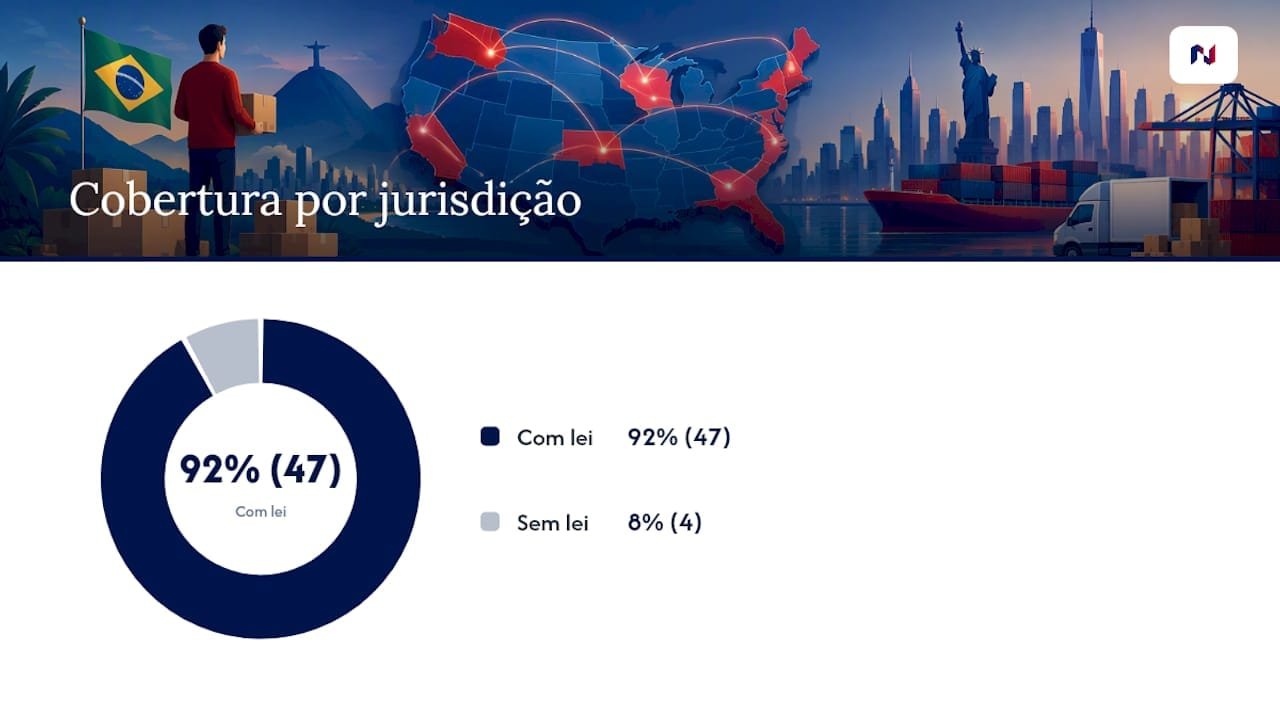
The laws of marketplace facilitator They require platforms like Amazon, Walmart, and Etsy to collect and remit sales tax on behalf of sellers. This already exists in [context missing - likely a placeholder or error]. 46 states plus the District of Columbia, which in practice covers almost all the territory relevant to Brazilian sellers.
This doesn't mean your obligation ends there. Several states require sellers with Nexus to register and report sales even when the marketplace has already collected the tax from the consumer. It's a subtle distinction, but it changes everything when it comes to audits.
- The platform typically calculates, charges, and remits the tax on marketplace transactions.
- The seller may still need to register and declare these sales, even if there is no additional tax to pay.
- Storing inventory in an Amazon fulfillment center typically creates a physical nexus automatically.
- Illinois is a partial exception, with specific rules for inventory used exclusively in marketplace sales.
Assuming that "Amazon already solves this" is, today, the most common reason why foreign sellers fall under the radar of state audits.
Checklist to start collecting e-commerce sales tax correctly.
Bringing the operation into compliance follows a logical order. Skipping steps usually leads to rework or fines.
- Consolidate sales by state. Separate what comes from marketplaces from what comes from your own store (Shopify, WooCommerce, or your own platform), because the liability rules change between the two channels.
- Obtain your EIN from the IRS. Most states require this number to release the sales tax registration, and it is... common prerequisite for state registration.
- Gather the required documentation. The main address, NAICS code, and owner identification are usually standard; some states, such as Massachusetts and Connecticut, also require bonds for foreign companies.
- Register before you start collecting. The usual timeframe is around 30 to 60 days after crossing the threshold; Some states require registration even before the next sale.
- Adjust your e-commerce platform. Configure the tax rate calculation by origin and destination, test the checkout process, and confirm that digital products or services are subject to the correct state taxation.
Pro tip: Don't put off your EIN. It's usually the item that causes the most delays in state registration, and applying in advance prevents your store from being unable to legally collect taxes for a week.
Declaration and payment: the routine after registration.
Each state sets its own reporting frequency, usually monthly, quarterly, or annually, based on reported sales volume. Higher volumes tend to push the company toward a shorter reporting period.
- Payment typically requires an ACH or wire transfer; cards issued outside the U.S. are frequently rejected on state portals.
- Brazilian companies without a US bank account frequently face this obstacle, which reinforces the importance of resolving this step before the first due date.
- Sales collected through the marketplace still need to appear on the tax return, even when there is no additional tax to be collected.
- Hiring a Certified Service Provider within the Streamlined Sales Tax program can handle filing and remittance in participating states, reducing the operational burden.
Errors that most often lead to audits and how to avoid them.
The most common mistake is simple to describe and expensive to correct: having a Nexus account, especially for FBA inventory, and not registering. This usually happens when the seller assumes that the marketplace's collection process fulfills all obligations.
- Excluding marketplace sales from the threshold calculation distorts the true number of exposures.
- Delaying the first tax return or submitting empty returns without justifying the absence of taxable sales.
- Do not keep resale certificates for tax-exempt purchases of supplies.
- Relying solely on manual spreadsheets to monitor thresholds in dozens of states simultaneously.
Pro tip: Automate state-level monitoring with an ERP or spreadsheet integrated with your sales volume. This is the adjustment that most reduces initial risk for those starting to sell in the US, because it prevents the threshold from being crossed unnoticed.
What experience with Brazilian customers in the US shows
Growing volumes across multiple states almost always arrive before the fiscal structure that should support them. It's a recurring pattern: the Brazilian company's sales take off, it expands its use of Amazon fulfillment centers in several states, and only then does it realize it needs serious nexus mapping.

Naventia connects Brazilian companies to the American market with tax, legal and operational planning Designed for this specific moment. A diagnosis makes sense when sales volume is rising consistently, when FBA starts operating in multiple distribution centers, or when direct sales already have a significant presence in several states at the same time.
This diagnosis typically covers mapping the nexus by state, choosing the most appropriate corporate structure, opening an EIN and bank account, and a declaration plan that avoids surprises in the first audit.
— Flavio Inacarato
How Naventia structures its compliance entry into the US
Resolving sales tax is just one piece of a larger project, which usually includes choosing a state, corporate structure, and opening a bank account, all tied together in a single strategy rather than isolated decisions. There are services that rely on specialists in the United States, offering guidance that considers your company's actual sales history, the states where you already have a nexus, and the specific risks of your business model.

Some services related to the topic of this article include state-specific nexus diagnostics, support with state registration, EIN and US bank account opening, and operational integration between marketplaces and your own store. If your company already sells to the US or is structuring this entry, it's worth reviewing the... Naventia services page and request an initial diagnosis. It's a paid, personalized service designed for those who already have a real intention of operating in the American market, not for those who are still just researching the topic.
Sources
Please also consult the guide on LLC taxation in the US for Brazilians and the official state websites before each registration.
- US Sales Tax For Foreign Sellers: The Definitive 2026 Guide
- What Is Sales Tax Nexus? Definitive 2026 Guide For Sellers
- Marketplace Facilitator
Frequently Asked Questions
Do I need to charge e-commerce sales tax if I only sell through Amazon FBA?
Yes, in most cases. Maintaining inventory in an Amazon fulfillment center usually creates a physical nexus automatically, regardless of sales volume, which requires registration in the state where the product is stored.
The marketplace already collects the tax, so I don't need to register?
Not necessarily. Marketplace facilitator laws cover 46 states plus the District of Columbia, but many of them still require sellers with Nexus to register and declare sales, even without additional tax to pay.
What is the sales threshold that requires me to register in a state?
The most common standard is US$ $100,000 in sales or 200 transactions per calendar year, but states like California, New York, and Texas use different values or rules. Check the specific legislation before assuming the standard number.
How much time do I have to register after crossing the threshold?
The timeframe is usually 30 to 60 days after exceeding the state threshold, although some states require registration even before the next taxable sale.
Does Naventia help with filing sales tax in the US?
Naventia offers nexus diagnostics, state registration support, EIN opening, and bank account setup as part of its US market entry consulting services. Details of each service are available on the services page.