

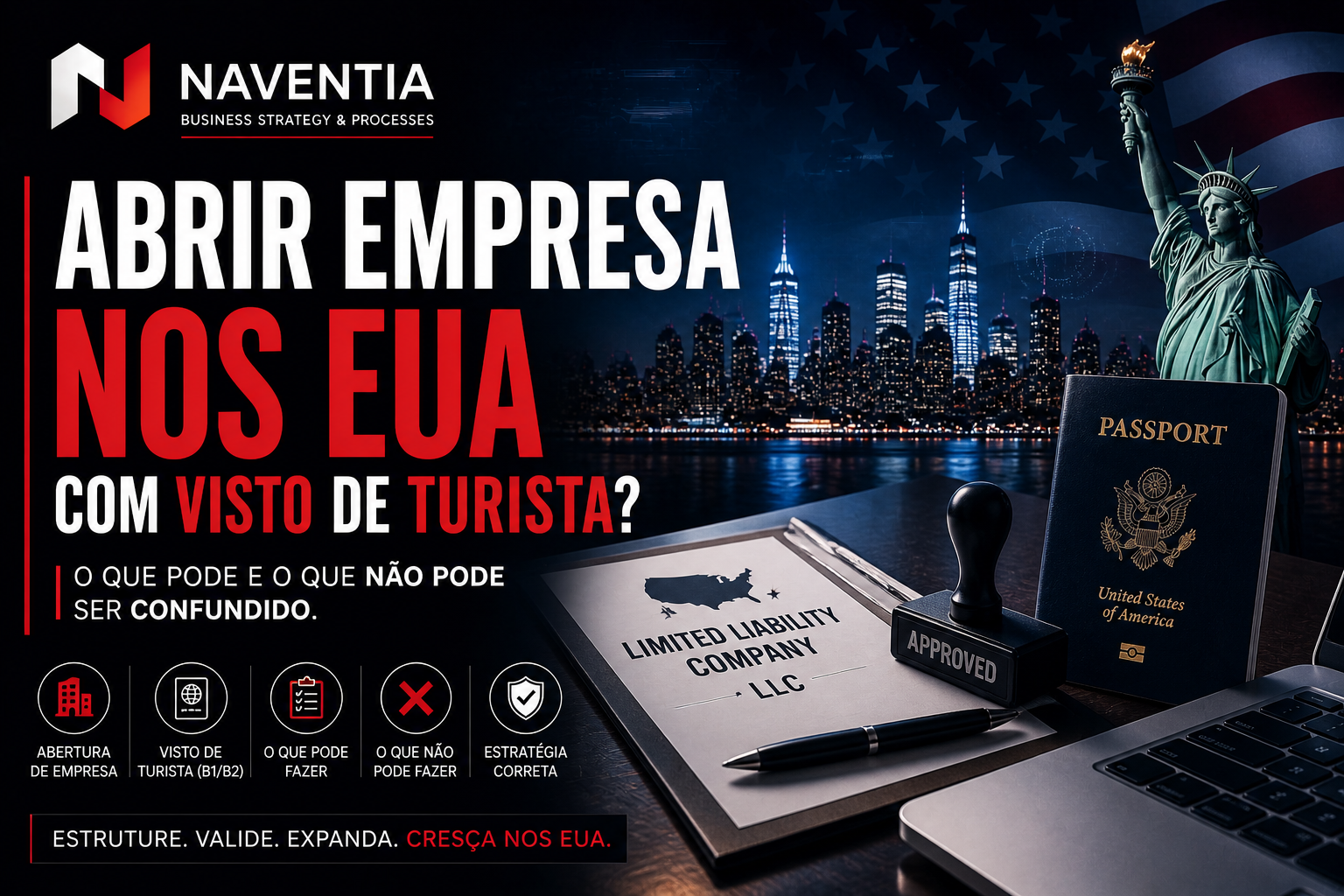
One of the most common questions among Brazilian entrepreneurs planning to expand into the United States is:
Is it possible to open a business in the US with a tourist visa?
The short answer is yes.
You can open a business in the United States even if you have a tourist visa or a B1/B2 business visa.
But it is precisely here that one of the biggest confusions within the internationalization process begins.
Many business owners get confused. owning a company with to be legally authorized to work within the United States.
And this confusion can lead to significant consequences, including:
- migration problems
- inconsistencies in future entries into the country
- difficulties in visa renewals
- tax and corporate risks
- complications in business visa processes
If your intention is to structure an international operation in a serious way, understanding this difference is not optional.
It's part of the strategy.
Can I open a business in the US with a tourist visa?
Yes.
American law allows foreigners to own businesses in the United States.
This means that a Brazilian entrepreneur can open structures such as:
- LLC
- Corporation
- Holding company
- Investment entities
Even without American residency.
In practice, many entrepreneurs begin their international expansion in this way.
During this process, it is also common to register the company in states such as:
- Florida
- Delaware
- Wyoming
- Texas
The choice of state, in particular, can directly impact taxation, compliance, and scalability.
This topic was explored in more detail in the article:
LLC, Corporation, or other structure: how to choose without compromising the future of your business.
https://naventia.com/llc-corporation-ou-outra-estrutura-como-escolher-sem-comprometer-o-futuro-do-negocio/
The important point is:
A tourist visa does not prevent you from owning a business in the USA.
You can be:
- partner
- investor
- shareholder
- member of an LLC
But that doesn't mean you can operate freely within the country.
What can be done with a B1/B2 visa in the United States?
According to USCIS official guide on visitor visas, Those in the U.S. on a tourist visa can participate in meetings and negotiate contracts, but cannot work locally or manage day-to-day operations. Therefore, opening a business in the U.S. on a tourist visa requires extra care regarding what is done during the stay.
Depending on the context of the trip, businesspeople with tourist or business visas can carry out strategic activities related to company growth.
Among them:
- business meetings
- participation in business events
- networking with partners and suppliers
- technical visits
- market analysis
- strategic structuring of the operation
- corporate opening
- business research
This means that an entrepreneur can begin building an international presence without necessarily possessing a work visa.
Furthermore, before opening a trade, we recommend validating the market.
This process was explored in more detail here:
How to validate demand in the US before opening operations.
https://naventia.com/como-validar-demanda-nos-eua/
This step reduces risk and preserves capital.
What you cannot do with a tourist visa
This is where many entrepreneurs make mistakes.
A tourist visa does not authorize operational work within the United States.
This includes activities such as:
- to provide services locally
- To serve customers operationally in the United States.
- receive compensation for operational activity performed in the USA
- working in person as part of the company's routine
- to act as an active employee of the local operation.
In other words:
You can own the company.
But they cannot work as operational labor with inadequate immigration status.
And that distinction makes all the difference.
The most common mistake Brazilian entrepreneurs make.
Many business owners decide Opening a business in the US with a tourist visa without understanding the limitations of their own migratory status, which can lead to serious complications later on.
In practice, many entrepreneurs follow this path:
First, they open an LLC.
Then they travel to the United States with a B1/B2 visa.
Next, they begin to participate in the company's operational routine.
They hold business meetings, mentor the local team, carry out daily tasks, and begin to operate as active managers.
The problem is that, depending on how this action takes place, it can generate inconsistencies in migration.
And the impact can appear at times such as:
- future entry into the United States
- consular interviews
- visa renewals
- business visa processes
- business-based immigration applications
The problem usually doesn't appear at the beginning.
But it can appear when the company starts to grow.
Opening a business does not mean authorization to operate.
It's worth repeating: Opening a business in the US with a tourist visa It is legally possible, but this does not change the immigration status of those who are in the country — the company exists, but the authorization to work for it does not.
This is one of the most overlooked points.
Opening a business in the US and obtaining immigration authorization are different things.
One thing is the business structure.
Another factor is the migratory structure.
The business structure answers questions such as:
- What is the best type of company structure?
- Where to open?
- How to tax?
- How to distribute profits?
The migratory structure answers different questions:
- Who can operate?
- What is your immigration status?
- What activities are allowed?
- When does a business visa become necessary?
Mixing these two themes is one of the most costly mistakes in international expansion.
In fact, many tax problems begin precisely because of open structures lacking a global perspective.
This point was explored in more detail here:
Tax mistakes when opening a business in the USA: what foreigners do wrong.
https://naventia.com/erros-tributarios-ao-abrir-empresa-nos-eua-o-que-estrangeiros-fazem-errado/
In short: whoever thinks about Opening a business in the US with a tourist visa You must clearly distinguish between formalizing a company and obtaining authorization to operate in the country.
How do more structured companies do this?
More mature companies typically follow a more strategic approach.
Strategic entry
At first, they do:
- market research
- local networking
- corporate definition
- tax planning
Commercial validation
Then they test it:
- lead acquisition
- commercial channels
- real demand
- offer adaptation
Growth structure
Only then do they engage in discussions about:
- business visas
- physical presence
- local hiring
- operational expansion
This approach reduces risk and increases predictability.
Conclusion
Yes, it is possible to open a business in the United States with a tourist visa.
But that doesn't mean you're automatically authorized to operate freely within the country.
Business owners who achieve consistent growth understand that internationalization involves three pillars:
corporate structure
tax compliance
migration strategy for entrepreneurship in the USA
Ignoring any of them could compromise growth, profit margins, and legal security.
Starting a business is simple.
Structuring it correctly is another story.
Talk to Naventia
If you are planning to open a business in the United States and still have questions about corporate structure, taxation, or expansion strategy, now is the time to organize your operations.
At Naventia, we help Brazilian entrepreneurs enter the American market with intelligence, compliance, and a long-term vision.
Naventia works alongside companies that want to expand with strategy, security, and a global vision.
If this is your moment, perhaps it's time to give it a try. next step — with those who already understand the way.