

Uma das dúvidas mais comuns entre empresários brasileiros que planejam expandir para os Estados Unidos é:
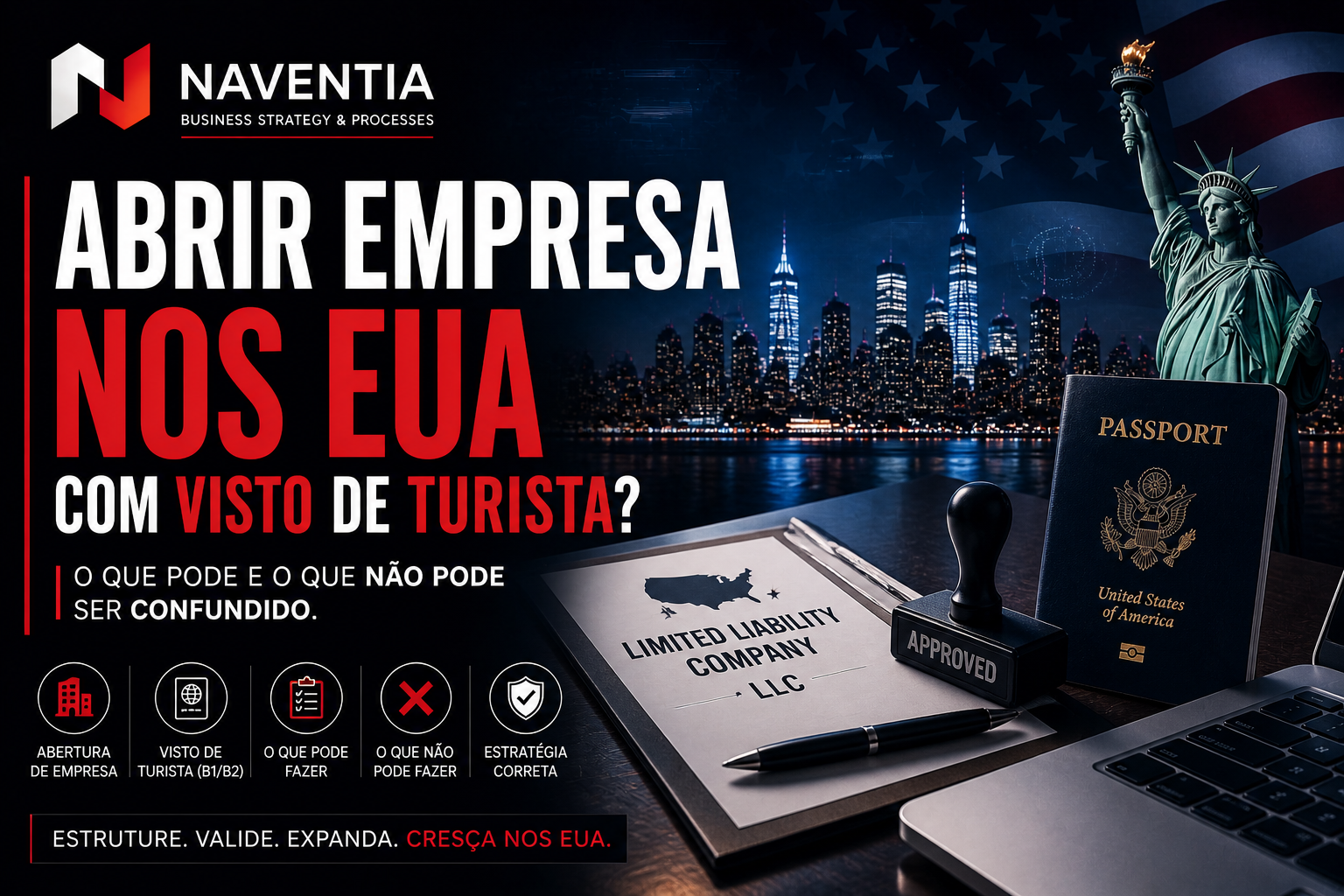
É possível abrir empresa nos EUA com visto de turista?
A resposta curta é sim.
Você pode abrir uma empresa nos Estados Unidos mesmo estando com visto de turista ou com visto de negócios B1/B2.
Mas é exatamente aqui que começa uma das maiores confusões dentro do processo de internacionalização.
Muitos empresários confundem ser proprietário de uma empresa com estar legalmente autorizado a trabalhar dentro dos Estados Unidos.
E essa confusão pode gerar consequências relevantes, incluindo:
- problemas migratórios
- inconsistências em futuras entradas no país
- dificuldades em renovações de visto
- riscos tributários e societários
- complicações em processos de vistos empresariais
Se sua intenção é estruturar uma operação internacional de forma séria, entender essa diferença não é opcional.
É parte da estratégia.
Posso abrir empresa nos EUA com visto de turista?
Sim.
A legislação americana permite que estrangeiros sejam proprietários de empresas nos Estados Unidos.
Isso significa que um empresário brasileiro pode abrir estruturas como:
- LLC
- Corporation
- Holding company
- Investment entities
Mesmo sem residência americana.
Na prática, muitos empresários iniciam sua expansão internacional dessa forma.
Durante esse processo, também é comum registrar a empresa em estados como:
- Florida
- Delaware
- Wyoming
- Texas
A escolha do estado, inclusive, pode impactar diretamente tributação, compliance e escalabilidade.
Esse tema foi aprofundado no artigo:
LLC, Corporation ou outra estrutura: como escolher sem comprometer o futuro do negócio
https://naventia.com/llc-corporation-ou-outra-estrutura-como-escolher-sem-comprometer-o-futuro-do-negocio/
O ponto importante é:
O visto de turista não impede que você seja dono de uma empresa nos EUA.
Você pode ser:
- sócio
- investidor
- acionista
- membro de uma LLC
Mas isso não significa que você pode operar livremente dentro do país.
O que pode ser feito com visto B1/B2 nos Estados Unidos
De acordo com o guia oficial do USCIS sobre vistos de visitante, quem está nos EUA com visto de turista pode participar de reuniões e negociar contratos, mas não pode trabalhar localmente nem administrar operações do dia a dia. Por isso, abrir empresa nos EUA com visto de turista exige cuidado redobrado com o que é feito durante a estadia.
Dependendo do contexto da viagem, empresários com visto de turismo ou negócios podem realizar atividades estratégicas relacionadas ao crescimento da empresa.
Entre elas:
- reuniões comerciais
- participação em eventos empresariais
- networking com parceiros e fornecedores
- visitas técnicas
- análise de mercado
- estruturação estratégica da operação
- abertura societária
- pesquisas comerciais
Isso significa que um empresário pode iniciar a construção da presença internacional sem necessariamente possuir um visto de trabalho.
Inclusive, antes de abrir uma operação, recomendamos validar mercado.
Esse processo foi aprofundado aqui:
Como validar demanda nos EUA antes de abrir operação
https://naventia.com/como-validar-demanda-nos-eua/
Essa etapa reduz risco e preserva capital.
O que não pode ser feito com visto de turista
Aqui está o ponto onde muitos empresários cometem erros.
O visto de turista não autoriza trabalho operacional dentro dos Estados Unidos.
Isso inclui atividades como:
- prestar serviços localmente
- atender clientes de forma operacional em território americano
- receber remuneração por atividade operacional realizada nos EUA
- trabalhar presencialmente na rotina da empresa
- atuar como funcionário ativo da operação local
Em outras palavras:
Você pode ser dono da empresa.
Mas não pode atuar como mão de obra operacional com status migratório inadequado.
E essa distinção faz toda a diferença.
O erro mais comum de empresários brasileiros
Muitos empresários decidem abrir empresa nos EUA com visto de turista sem entender os limites da própria condição migratória, o que pode gerar complicações sérias mais adiante.
Na prática, muitos empresários seguem este caminho:
Primeiro abrem uma LLC.
Depois viajam para os Estados Unidos com visto B1/B2.
Em seguida começam a participar da rotina operacional da empresa.
Fazem reuniões comerciais, acompanham equipe local, executam atividades diárias e começam a operar como gestores ativos.
O problema é que, dependendo da forma como essa atuação acontece, isso pode gerar inconsistências migratórias.
E o impacto pode aparecer em momentos como:
- entrada futura nos Estados Unidos
- entrevistas consulares
- renovações de visto
- processos de vistos empresariais
- pedidos de imigração baseados em negócios
O problema geralmente não aparece no início.
Mas pode aparecer quando a empresa começa a crescer.
Empresa aberta não significa autorização para trabalhar
Vale repetir: abrir empresa nos EUA com visto de turista é juridicamente possível, mas isso não muda o status migratório de quem está no país — a empresa existe, a autorização para trabalhar nela, não.
Esse é um dos pontos mais ignorados.
Abrir empresa nos EUA e ter autorização migratória são temas diferentes.
Uma coisa é a estrutura empresarial.
Outra é a estrutura migratória.
A estrutura empresarial responde perguntas como:
- qual o melhor tipo societário?
- onde abrir?
- como tributar?
- como distribuir lucros?
A estrutura migratória responde perguntas diferentes:
- quem pode operar?
- em qual status migratório?
- quais atividades são permitidas?
- quando um visto de negócios passa a ser necessário?
Misturar esses dois temas é um dos erros mais caros da expansão internacional.
Inclusive, muitos problemas tributários começam exatamente por estruturas abertas sem visão global.
Esse ponto foi aprofundado aqui:
Erros tributários ao abrir empresa nos EUA: o que estrangeiros fazem errado
https://naventia.com/erros-tributarios-ao-abrir-empresa-nos-eua-o-que-estrangeiros-fazem-errado/
Em resumo: quem pensa em abrir empresa nos EUA com visto de turista deve separar bem o que é formalização societária do que é autorização para atuar no país.
Como empresas mais estruturadas fazem isso
Empresas mais maduras normalmente seguem uma lógica mais estratégica.
Entrada estratégica
No início, fazem:
- pesquisa de mercado
- networking local
- definição societária
- planejamento fiscal
Validação comercial
Depois testam:
- aquisição de leads
- canais comerciais
- demanda real
- adaptação de oferta
Estrutura de crescimento
Só depois entram em discussões sobre:
- vistos empresariais
- presença física
- contratação local
- expansão operacional
Esse caminho reduz risco e aumenta previsibilidade.
Conclusão
Sim, é possível abrir empresa nos Estados Unidos com visto de turista.
Mas isso não significa que você está automaticamente autorizado a operar livremente dentro do país.
Empresários que crescem de forma consistente entendem que internacionalização envolve três pilares:
estrutura societária
compliance tributário
estratégia migratória para empreender nos EUA
Ignorar qualquer um deles pode comprometer crescimento, margem e segurança jurídica.
Abrir empresa é simples.
Estruturar corretamente é outra história.
Fale com a Naventia
Se você está planejando abrir empresa nos Estados Unidos e ainda tem dúvidas sobre estrutura societária, tributação ou estratégia de expansão, esse é o momento de organizar sua operação.
Na Naventia, ajudamos empresários brasileiros a entrar no mercado americano com inteligência, compliance e visão de longo prazo.
A Naventia atua ao lado de empresas que querem expandir com estratégia, segurança e visão global.
Se esse é o seu momento, talvez seja hora de dar o próximo passo — com quem já entende o caminho.