
Atendimento comercial nos EUA é um dos fatores mais decisivos para empresas brasileiras que desejam crescer no mercado americano.
Muitos empresários acreditam que os maiores desafios da internacionalização estão em:
- abrir empresa nos Estados Unidos
- estruturar tributação internacional
- contratar equipe local
- entender compliance
Tudo isso realmente importa.
Mas existe uma variável operacional que destrói mais oportunidades comerciais do que a maioria imagina:
Velocidade de resposta.
Nos Estados Unidos, velocidade não é diferencial.
Velocidade é expectativa.
E é exatamente aqui que muitas empresas brasileiras começam a perder mercado antes mesmo de apresentar uma proposta.
O erro invisível que mata vendas nos EUA
No Brasil, muitos empresários ainda acreditam em uma lógica comum:
“Se o lead estiver realmente interessado, ele vai esperar.”
Nos Estados Unidos, isso raramente acontece.
O comportamento do comprador americano é diferente.
Ele costuma:
- pesquisar fornecedores rapidamente
- comparar propostas com velocidade
- agendar reuniões em pouco tempo
- tomar decisões comerciais com mais objetividade
E principalmente:
Ele segue para o próximo fornecedor rapidamente.
Isso significa que, se sua empresa demora:
- 4 horas para responder um lead
- 24 horas para confirmar uma reunião
- 2 dias para enviar uma proposta
- vários dias para fazer follow-up
Em muitos setores…
A oportunidade já foi perdida.
O padrão americano de atendimento comercial
Empresas que vendem bem nos Estados Unidos normalmente seguem três pilares operacionais.
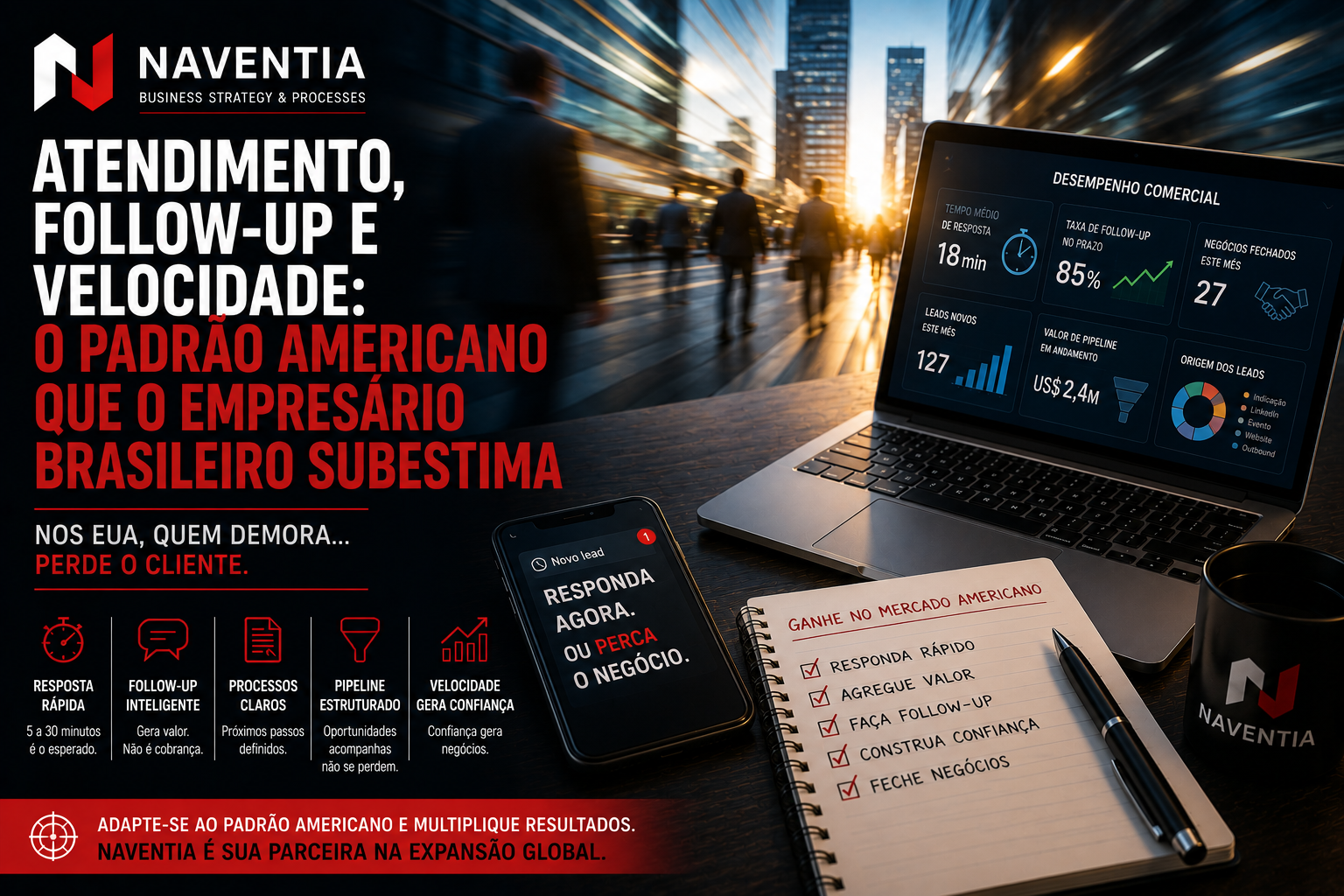
Resposta rápida
Empresas americanas costumam operar com SLA comercial claro.
Em muitos mercados B2B, o padrão esperado costuma ser:
Leads inbound
Resposta entre 5 e 30 minutos
Propostas comerciais
Entrega entre 24 e 48 horas
Follow-up pós-reunião
Contato no mesmo dia
A percepção do cliente costuma ser simples:
Quem responde rápido provavelmente executa melhor.
Esse comportamento se conecta diretamente com:
Como montar processo comercial nos EUA sem inflar a estrutura cedo demais
https://naventia.com/processo-comercial-nos-eua/
Follow-up estruturado
Outro ponto crítico está no follow-up.
No Brasil, muitas empresas ainda fazem follow-up emocional.
Mensagens como:
- “Só passando para saber…”
- “Teve tempo de analisar?”
- “Fico no aguardo.”
Nos Estados Unidos, follow-up precisa gerar valor.
Empresas mais maduras costumam usar follow-ups que incluem:
- cases relevantes
- benchmarks do setor
- insights de mercado
- antecipação de objeções
- materiais estratégicos
No mercado americano, follow-up não persegue.
Follow-up conduz.
Clareza operacional
O cliente americano quer previsibilidade.
Ele espera saber com clareza:
- próximos passos
- cronograma
- responsáveis
- entregáveis
- riscos envolvidos
Empresas que não comunicam isso transmitem insegurança.
Mesmo quando possuem um ótimo produto ou serviço.
Onde empresas brasileiras mais falham
Os erros mais comuns que observamos são:
Responder devagar
Muitas empresas ainda acreditam que relacionamento compensa lentidão.
Nos EUA, normalmente não compensa.
Follow-up sem estratégia
Mensagens genéricas costumam gerar silêncio.
Processo comercial inconsistente
Cada vendedor trabalha de um jeito.
Cada proposta segue um padrão diferente.
Falta de CRM
Leads ficam espalhados entre:
- planilhas
- anotações pessoais
E oportunidades desaparecem.
Pós-reunião fraco
Sem resumo.
Sem próximos passos.
Sem senso de urgência.
Esse tema também conversa com:
Planejamento estratégico para entrar nos EUA: o que precisa existir antes da operação
https://naventia.com/planejamento-estrategico-entrar-nos-eua/
O impacto financeiro da lentidão
Nos Estados Unidos, lentidão custa caro porque o custo de aquisição de clientes costuma ser elevado — e um atendimento comercial nos EUA mais lento que o concorrente significa leads perdidos.
Quando sua empresa gera leads por meio de:
Investir em geração de leads sem investir em atendimento comercial nos EUA é desperdiçar o próprio orçamento de marketing.
- eventos
- networking
- LinkedIn outbound
- campanhas de mídia paga
- parcerias estratégicas
…e perde oportunidades por falhas operacionais…
Você não está apenas perdendo vendas.
Você está queimando CAC.
E empresas que queimam aquisição sem previsibilidade perdem competitividade rapidamente.
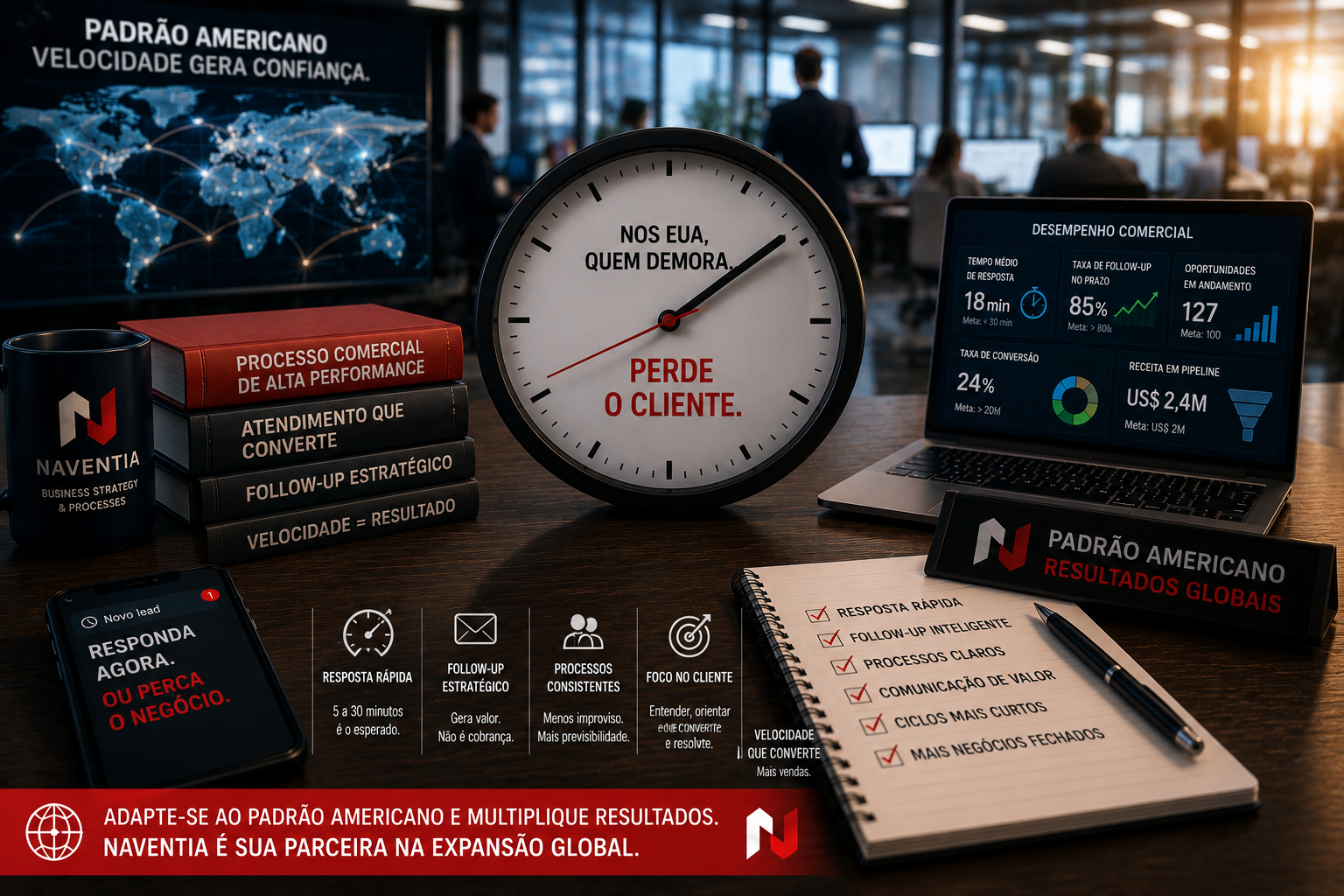
Como estruturar um atendimento comercial nos EUA em 4 passos
Montar um atendimento comercial nos EUA que realmente compita exige mais do que boa vontade. Exige processo.
- Defina um SLA de resposta. Empresas que praticam um bom atendimento comercial nos EUA respondem em minutos, não em dias.
- Automatize o primeiro contato. Um e-mail ou mensagem automática mostra que o atendimento comercial nos EUA da sua empresa está ativo mesmo fora do horário comercial brasileiro.
- Padronize follow-ups. Sem sequência estruturada, o atendimento comercial nos EUA vira dependente de memória individual.
- Meça o tempo de resposta. O que não é medido não melhora — e isso vale especialmente para o atendimento comercial nos EUA.
Empresas brasileiras que aplicam esses quatro passos relatam ciclos de venda mais curtos e taxas de conversão mais altas no mercado americano.
O que empresas maduras fazem diferente
Empresas que conseguem vender com consistência nos EUA normalmente implementam:
- SLA comercial
- CRM estruturado
- sequências automatizadas
- templates comerciais
- follow-up consultivo
- forecast previsível
Elas não deixam oportunidades dependerem de memória.
Segundo o guia de marketing e vendas da U.S. Small Business Administration (SBA), o acompanhamento pós-venda e a experiência do cliente são fatores decisivos para fidelização no mercado americano — reforçando por que o atendimento comercial nos EUA precisa ser tratado como processo, não como improviso.
Dependem de processo.
O que muda quando sua empresa se adapta
Quando empresas brasileiras adotam o padrão americano de velocidade, normalmente percebem:
- ciclos comerciais menores
- maior taxa de resposta
- mais reuniões convertidas
- percepção premium
- previsibilidade comercial
Porque no mercado americano…
Velocidade comunica competência.
Conclusão
Seu produto pode ser excelente.
Sua estratégia pode estar correta.
Sua estrutura jurídica pode estar pronta.
Mas se o seu atendimento comercial nos EUA não acompanha a velocidade do mercado…
O cliente nunca vai descobrir.
Nos Estados Unidos:
Quem demora, não compete.
Fale com a Naventia
Na Naventia, ajudamos empresários brasileiros a estruturar operações comerciais internacionais com processos, previsibilidade e crescimento sustentável.
A Naventia atua ao lado de empresas que querem expandir com estratégia, segurança e visão global.
Se esse é o seu momento, talvez seja hora de dar o próximo passo — com quem já entende o caminho.