

For years, thousands of foreign entrepreneurs — especially from Brazil — set up companies in the United States believing they were making a strategic move.
Earning in dollars.
Optimizing taxes.
Operating globally.
Protecting assets.
The logic made sense.
But the landscape has changed.
And it changed quietly — as the most significant tax shifts often do.
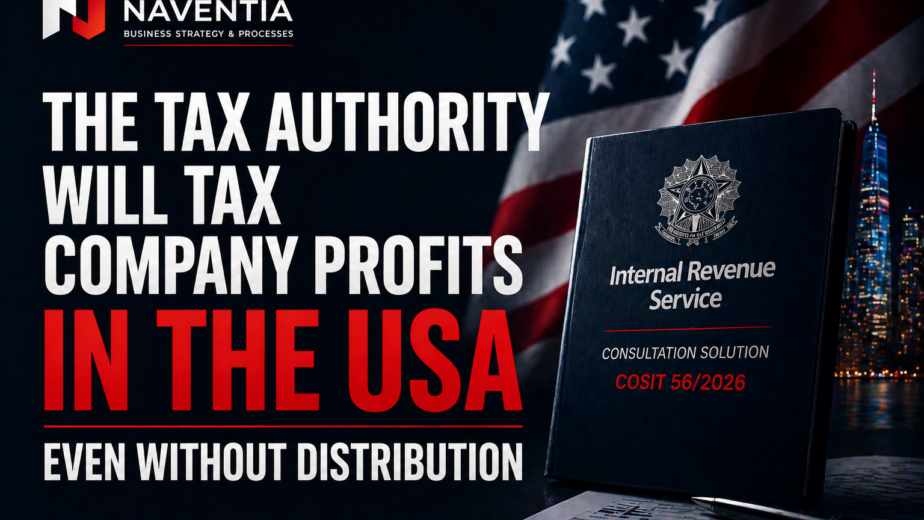
Recent interpretations by Brazilian tax authorities (COSIT 56/2026) have reshaped how U.S. LLC structures are treated for tax purposes.
This is not a technical adjustment.
It is a structural shift.
The Core Issue Most People Are Missing
Most discussions focus on the technical aspects of the regulation.
But the real impact is much broader.
U.S. LLC taxation for foreigners has changed — and this shift can directly affect how profits are treated, even when no distribution occurs.
This is the key point.
And it fundamentally changes the logic behind many international structures.
What This Means in Practice
If your LLC is treated as a pass-through entity in the U.S. — which is common — and you are a tax resident in another country, such as Brazil, authorities may interpret:
- the company’s profits as already belonging to you
- regardless of distribution
- regardless of cash transfer
This creates a scenario where profits retained in the company may still be subject to taxation.
Without proper structuring, there is no protection.
Why This Is More Serious Than It Seems
This is not just about taxation.
It is about breaking the financial logic of the business.
Many international structures were built on a simple assumption:
taxes are paid when profits are distributed.
That assumption no longer holds in many cases.
The impact is direct:
- cash flow is affected
- reinvestment becomes more expensive
- growth slows down
Companies that reinvest profits may now face taxation as if those profits had already been distributed.
That misalignment reduces scalability.
The Structural Mistake Behind the Problem
Most companies facing this issue made the same strategic mistake.
They confused simplicity with efficiency.
Setting up an LLC is simple.
Designing an international structure is not.
Many entrepreneurs:
- ignored the relationship between the company and their personal tax residency
- focused on operational setup instead of tax architecture
- lacked long-term planning
The result is a structure that worked under a permissive interpretation — but is now exposed.
The Real Financial Impact
Consider a company generating consistent profits and reinvesting all earnings.
Previously, taxation was tied to distribution.
Now, there is potential exposure to recurring taxation, even without cash withdrawals.
This changes everything.
The issue is not just paying more taxes.
It is losing predictability, control, and efficiency.
The Most Expensive Mistake Right Now
The biggest mistake at this stage is doing nothing.
Maintaining the same structure and assuming it will not be affected is not strategy.
It is risk.
International tax exposure rarely appears immediately.
It builds over time.
And when it surfaces, it comes with penalties, interest, and enforcement.
Rethinking International Structure
This is not about opening a company abroad anymore.
It is about structuring a global operation.
That requires:
- jurisdictional strategy
- clear separation between individual and entity
- defined profit treatment
- governance and compliance
- long-term planning
Without this, the business may operate — but it will struggle to scale sustainably.

Strategic Paths Forward
There is no one-size-fits-all solution.
But there are clear strategic directions.
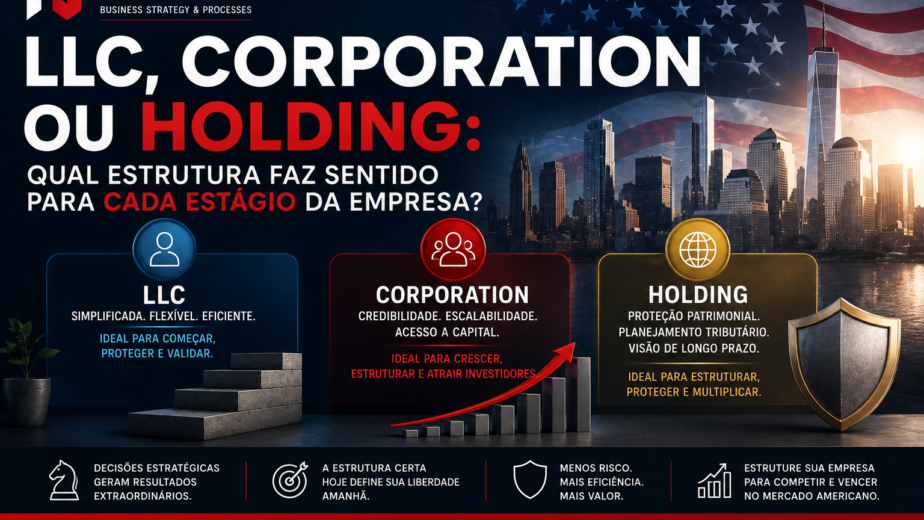
One approach is adopting corporate structures that create a clear separation between the entity and the individual, reducing exposure.
Another is adjusting the tax classification of the entity in the U.S., aligning it with the desired tax treatment.
In more advanced cases, companies may need a full restructuring, including holding structures, ownership redesign, and international tax planning.
These are not operational tweaks.
They are strategic decisions.
The Point No One Is Emphasizing
The regulation did not create the problem.
It exposed it.
Many companies internationalized their operations.
But they did not internationalize their strategy.
Conclusion
The question is no longer whether having a U.S. LLC is a good idea.
The real question is:
Is your structure prepared for the current tax environment?
Companies that fail to reassess their structure risk losing efficiency, margins, and long-term growth capacity.
Final Thought
If you operate a U.S. LLC while residing abroad, this is the moment to revisit your structure.
The biggest risk is not entering international markets.
It is operating with the wrong framework.
Understanding U.S. LLC taxation for foreigners is no longer optional.
It is fundamental.
If you have a U.S. LLC and want to understand how these changes impact your structure, it may be worth reviewing your setup with a strategic lens.
At Naventia, we help companies design international structures aligned with tax efficiency, compliance, and long-term growth.